In the ever-evolving digital landscape, businesses face a critical decision: should they invest in a traditional website, a native mobile app, or both? This choice often involves significant trade-offs in terms of cost, reach, and user experience. However, a revolutionary technology is bridging this gap, offering the best of both worlds: Progressive Web Apps (PWAs). These web applications deliver app-like experiences directly through the browser, without requiring a download from an app store.
If you’re an entrepreneur looking for an efficient way to reach a wider audience, or a business aiming to enhance user engagement and streamline your online presence, understanding why Progressive Web Apps are the future of web development is essential. They combine the ubiquity of the web with the powerful features of native apps, making them a smart choice for modern businesses. Click to learn more about the benefits and key features that position PWAs as the next frontier in digital innovation!
Key Takeaways
Progressive Web Apps (PWAs) are a powerful strategic choice for businesses prioritizing market reach, cost efficiency, and low-friction user engagement over deep device hardware integration.
- Low Friction Adoption: PWAs eliminate the need for an app store download, enabling users to install the app icon directly from the browser, leading to higher conversion rates and greater reach.
- Cost & Maintenance Efficiency: Using a single codebase (HTML, CSS, JavaScript) for all platforms dramatically reduces initial development costs and simplifies long-term maintenance, making it highly ROI-efficient.
- Offline Capability: Leveraging Service Workers, PWAs offer offline access to cached content and instant loading, ensuring a superior User Experience (UX) even in areas with unstable connectivity.
- Strategic Trade-Off: While excelling in speed and reach, PWAs have limitations in accessing advanced native hardware features (like NFC, deep Bluetooth), which may necessitate a Native App for highly specialized use cases.
The Digital Dilemma: Web vs. Native Apps
For years, businesses had to choose between two distinct digital presences:
- Websites: Accessible to everyone via a browser, but often lacking app-like speed, offline capabilities, and engagement features.
- Native Apps: Offer superior performance, offline access, push notifications, and device integration, but are costly to develop (for both iOS and Android), require app store approvals, and demand downloads and updates from users.
This “either/or” scenario often forced businesses to compromise. Many users are hesitant to download new apps due to storage concerns or simply prefer not to. This is where PWAs shine, offering a compelling alternative that delivers a rich, engaging experience without the typical app store friction.
What are Progressive Web Apps (PWAs)?
At their core, PWAs are websites built with modern web technologies that behave like native mobile applications. They leverage a set of standards and technologies to provide enhanced capabilities beyond traditional websites. PWAs are designed to be:
- Reliable: Load instantly, even in uncertain network conditions, thanks to Service Workers caching.
- Fast: Respond quickly to user interactions with smooth animations and minimal scrolling.
- Engaging: Offer features like push notifications and home screen installation, fostering re-engagement.
They are essentially a blend of web and app functionality, delivering a seamless experience.
Why Progressive Web Apps Are the Future of Web Development: Key Advantages
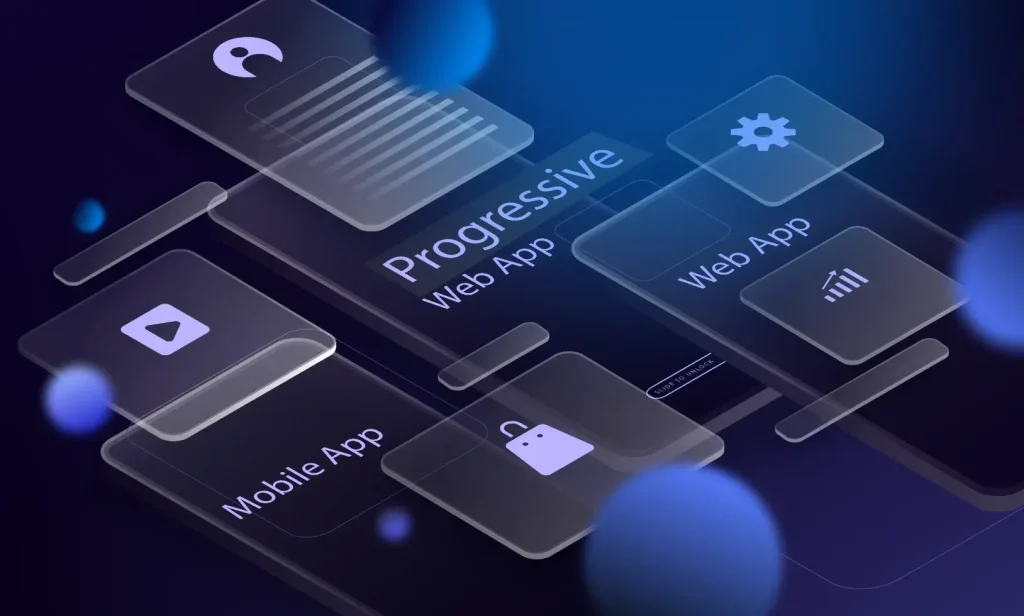
Let’s explore the compelling reasons why PWAs are rapidly gaining traction and are considered a cornerstone of future web development strategies.
1. Superior User Experience (UX) and Engagement
PWAs are built to deliver an experience that rivals native apps, leading to higher engagement.
- App-like Feel: With smooth animations, responsive designs, and native-like navigation, PWAs offer an intuitive and fluid user experience.
- Offline Capability: Thanks to Service Workers, users can browse cached content or even perform some actions offline, which is a major advantage over traditional websites.
- Faster Loading Times: PWAs load incredibly fast, often instantly, even on slow networks, significantly reducing bounce rates and improving user satisfaction.
- Push Notifications: Like native apps, PWAs can send push notifications, allowing businesses to re-engage users with timely updates, promotions, or reminders, boosting retention.
Real-World Example: Starbucks saw a 23% increase in daily active users after launching their PWA, demonstrating the power of a fast, engaging, and offline-capable web experience.
2. Cost-Effectiveness and Simplified Development
For businesses, PWAs offer a highly efficient development model.
- Single Codebase: Build once, deploy everywhere. Unlike native apps that require separate codebases for iOS and Android, PWAs use standard web technologies (HTML, CSS, JavaScript) that work across all browsers and devices. This significantly reduces development time and costs (often by 50-70%).
- Reduced Maintenance: Managing one codebase simplifies updates, bug fixes, and feature additions, saving ongoing maintenance expenses.
- No App Store Fees/Approvals: PWAs are delivered via the web, bypassing app store fees and the sometimes lengthy and strict approval processes.
Expert Insight: “For businesses looking for maximum reach with optimized resources, PWAs offer an incredible ROI,” states a digital product manager specializing in mobile solutions. “You get native app benefits without the native app price tag.”
3. Increased Reach and Accessibility
PWAs remove significant barriers to user adoption.
- No Download Required: Users can access a PWA directly from a browser URL. There’s no need to visit an app store, search, download, or install, reducing friction for new users.
- Direct Access from Home Screen: Users can “add to home screen” for quick access, making the PWA behave almost identically to a native app icon.
- Search Engine Discoverability: Since PWAs are essentially websites, their content is crawlable and indexable by search engines (Google, Bing, etc.). This makes them inherently SEO-friendly, allowing users to discover them through organic search, unlike native apps.
- Shareability: PWAs are shareable via URL, just like any webpage, making it easy for users to share the app with friends.
4. Continuous Updates and Fresh Content
Maintaining a PWA is much simpler than managing traditional apps.
- Instant Updates: Changes to a PWA are live as soon as they are deployed to the server; users always access the latest version automatically. This eliminates the need for manual app updates, which can be a point of friction for native app users.
- Always Up-to-Date: Users always experience the freshest content and features without needing to download large updates from app stores.
Also Read: Web Application Maintenance & Support Is the Silent Hero Behind Every Successful App
5. Future-Proofing Your Digital Presence
PWAs are built on open web standards, making them highly adaptable to future technologies.
- Cross-Device Compatibility: They are designed to work seamlessly across smartphones, tablets, desktops, and any device with a modern web browser.
- Browser Agnostic: PWAs function across different browsers, ensuring a consistent experience regardless of user preference.
- Embracing Web Evolution: As web technologies advance, PWAs can easily integrate new capabilities, ensuring they remain cutting-edge.
PWA Limitations: When Native Development is Still Necessary
While PWAs offer compelling advantages, they are not a one-size-fits-all solution. For certain high-performance or highly integrated applications, native development remains the optimal, and sometimes only, choice. Understanding these limitations is critical for making the right platform decision.
1. Advanced Device Hardware Access
PWAs, being web-based, operate within the security sandbox of the browser. This restricts their access to advanced device Application Programming Interfaces (APIs).
- Native Required For: Bluetooth control, NFC communication, extensive use of geo-fencing, sophisticated telephony features, and deep integration with device operating systems (e.g., custom widgets or background processing).
2. Performance Ceiling for Complex Graphics
While PWAs are fast, they have a performance ceiling.
- Native Required For: High-fidelity 3D graphics, competitive mobile gaming, augmented reality (AR) applications requiring rapid rendering, or apps that rely on intensive local data computation (e.g., video editing). Native code is compiled directly for the device, offering unparalleled processing speed.
3. Monetization and App Store Visibility
For some businesses, the App Store ecosystem is crucial for brand visibility and trusted monetization.
- Trade-Off: A PWA is not found in the App Store or Google Play Store (though it can be listed as a Trusted Web Activity/TWA). If your marketing strategy relies heavily on users browsing the app stores for discovery, a native presence may be necessary. Furthermore, the App Store provides a globally recognized platform for in-app purchases and subscriptions.
Summary Comparison: PWA vs. Alternatives
| Feature | Progressive Web App (PWA) | Cross-Platform App (React Native/Flutter) | Native App (Swift/Kotlin) |
| Development Cost | Lowest (Single Web Codebase) | Medium (Single Codebase, compiled) | Highest (Two Codebases) |
| Reach/Friction | Highest (Web/SEO Discoverable, No Download) | High (App Store Required) | High (App Store Required) |
| Offline Capability | High (via Service Workers) | High (via local storage) | Highest |
| Hardware Access | Limited (Restricted APIs) | Good (Accesses most core APIs) | Full Access (Unrestricted) |
| Updates | Instant/Automatic | Requires user update via App Store | Requires user update via App Store |
Conclusion: Embrace PWAs for a Smarter Digital Future
Why Progressive Web Apps are the future of web development? Because they offer a powerful, cost-effective, and user-centric solution that combines the best aspects of websites and native applications.
By delivering app-like experiences directly through the browser complete with offline capabilities, push notifications, and fast loading times – PWAs significantly enhance user engagement while simultaneously reducing development and maintenance overhead.
They are discoverable via search engines, easy to access, and inherently designed for the modern multi-device world. For any business looking to expand its reach and deliver a superior digital experience without the complexities of native app development, PWAs are the clear path forward.
If you’re ready to harness the power of PWAs and build a cutting-edge digital presence that stands out, partnering with experienced web and app development specialists is key. At RemoteForce, we specialize in comprehensive web and app development services, including the design and deployment of robust Progressive Web Apps.
Our expert team leverages the latest web technologies to create fast, engaging, and highly functional PWAs that deliver an exceptional user experience and drive real business results. Beyond web and app development, RemoteForce also offers digital marketing, graphic design, secretarial, legal, and accounting services, providing a holistic suite of solutions to empower your business.
Ready to future-proof your online presence with a Progressive Web App that delights your users? Contact RemoteForce today to discuss your PWA development project!
Frequently Asked Questions (FAQ)
1. Can a PWA use push notifications on both Android and iOS?
Yes, PWAs support push notifications on both Android (via Chrome) and increasingly on iOS (via Safari/Webkit), provided the user explicitly grants permission and has added the PWA to their home screen. This feature is a core component of PWA engagement.
2. How does PWA SEO work compared to a regular website?
PWA SEO works exactly like regular website SEO because PWAs are fundamentally enhanced websites. Their content is fully crawlable and indexable by search engines. In fact, due to their superior performance and faster loading times, PWAs often enjoy better search rankings than traditional, slower-loading websites.
3. Are Progressive Web Apps secure?
Yes, PWAs are inherently secure. A core requirement for a web application to be considered a PWA is that it must be served over HTTPS (a secure connection). This encryption protects data transfer between the user and the server, making PWAs compliant with modern security standards.
4. What are the main components needed to build a PWA?
The three main technical components that define a PWA are:
- Service Workers: JavaScript files that run in the background, enabling offline caching, instant loading, and push notifications.
- Web Manifest File: A JSON file that controls how the app appears to the user (e.g., icon, splash screen, display mode) when installed on the home screen.
HTTPS: Ensuring the app is delivered via a secure connection for data integrity and access to advanced browser features.

- Outsourced vs In-House Digital Marketing in Singapore: What Actually Makes Sense for Your SME - July 10, 2026
- Building a Digital Marketing Strategy for Singapore Businesses: A Practical Roadmap for 2026 - July 10, 2026
- How Much Does Digital Marketing Cost in Singapore? (2026 Pricing Guide for SMEs) - July 10, 2026