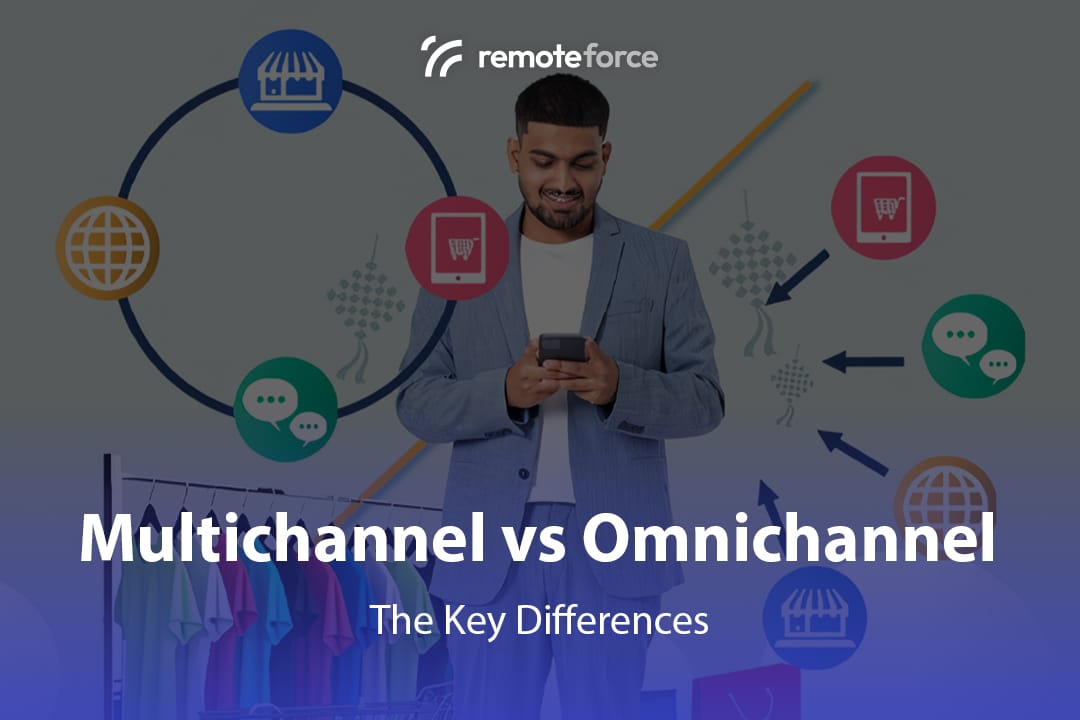
The terms “multichannel” and “omnichannel” are often used interchangeably, but they represent two fundamentally different approaches to marketing. While both strategies use multiple channels to reach customers, their core philosophy, execution, and customer experience goals are worlds apart.
Understanding this distinction is not just an exercise in semantics; it’s crucial for shaping your entire marketing strategy. This guide will break down the key differences, explore the pros and cons of each, and help you decide which approach is the best fit for your business goals.
Key Takeaways
The fundamental difference between Multichannel and Omnichannel marketing lies in integration and customer focus.
- Core Distinction: Multichannel uses multiple platforms that operate independently (in silos). Omnichannel uses multiple platforms that are seamlessly integrated to provide a single, unified experience.
- Focus of Strategy: Multichannel is Channel-Centric (maximizing reach on each platform). Omnichannel is Customer-Centric (ensuring the customer has a consistent journey across all touchpoints).
- Seamless Experience: The goal of Omnichannel is that a customer can transition effortlessly between any touchpoint—for example, starting an order on an app and completing it in a physical store without repeating information.
- Data Advantage: Omnichannel unifies all data into a single source, providing a 360-degree view of the customer’s history and preferences for truly relevant personalization.
Investment: Multichannel requires a lower investment and is faster to implement. Omnichannel requires a higher investment in unifying technology (CRM, CDP) but delivers higher long-term Customer Lifetime Value (CLV).
What is Multichannel Marketing?
At its core, multichannel marketing is a company-centric strategy focused on broadcasting your message across as many channels as possible. The goal is simple: maximize your reach and be present wherever your customers are.
In a multichannel approach, each channel, be it your e-commerce website, social media, email campaigns, or physical store—often operates in a silo. They may be designed to sell, but they don’t necessarily communicate with one another. The customer can choose a channel to interact with, but the journey between them is fragmented and often requires the customer to repeat information.
Example: A customer follows a brand on Instagram and sees an ad for a new product. Later, they visit the brand’s website to make a purchase, but they don’t get a “first-time buyer” discount they saw in an email campaign because the systems aren’t linked.
What is Omnichannel Marketing?
Omnichannel marketing, by contrast, is a customer-centric strategy designed to create a single, unified experience. It’s not just about using multiple channels; it’s about making sure those channels work together as one cohesive unit.
In an omnichannel approach, all your channels are fully integrated and share data. The customer can seamlessly move from one channel to another—from a mobile app to a physical store, from a social media ad to an email and the experience remains fluid, personalized, and consistent.
Example: A customer uses a retailer’s mobile app to check if a dress is in stock at their local store. They reserve the dress and receive a notification when it’s ready. The store associate greets them by name and the purchase is completed in-store, with the loyalty points automatically updated on the app.
Multichannel vs Omnichannel : Key Differences at a Glance
| Feature | Multichannel Marketing | Omnichannel Marketing |
|---|---|---|
| Primary Focus | Company (maximizing reach) | Customer (maximizing experience) |
| Channel Integration | Channels operate independently | All channels are fully integrated |
| Data Flow | Disconnected; data is in silos | Centralized; data is shared across channels |
| Customer Journey | Disconnected and fragmented | Seamless and continuous |
| Goal | Drive sales through each channel | Create a single, unified brand experience |
The Pros and Cons of Each Strategy
Choosing between these two strategies requires a clear understanding of what you can gain, and what you might sacrifice.
Multichannel Marketing
- Pros:
- Broader Reach: Quickly expand your presence across new platforms.
- Simpler Implementation: Requires less complex technology and integration.
- Effective for Basic Needs: Sufficient for businesses with simple transactions and no need for a complex customer journey.
- Cons:
- Inconsistent Messaging: Lack of coordination can lead to conflicting brand messages.
- Fragmented Experience: Customers may feel frustrated by disjointed interactions.
- Limited Insights: Without a single customer view, you can’t get a full picture of their behavior.
Omnichannel Marketing
- Pros:
- Higher Customer Loyalty: A seamless experience builds trust and encourages repeat business.
- Increased Revenue: Omnichannel customers have a higher Customer Lifetime Value (CLV).
- Superior Data Insights: A 360-degree view of the customer allows for powerful personalization and smarter decision-making.
- Enhanced Brand Consistency: The brand voice and experience remain uniform across all touchpoints.
- Cons:
- Higher Complexity: Requires a significant investment in technology and cross-departmental coordination.
- More Expensive: The cost of sophisticated CRM, marketing automation, and analytics tools can be high.
- Longer Implementation: A full-scale omnichannel strategy can take a long time to build and refine.
Also Read: Omnichannel Marketplace | Seamless Sales Across Channels
How to Choose the Right Strategy
The best strategy for you depends on your business’s size, resources, and long-term goals.
- Choose Multichannel if: You are a startup or a small business with limited resources, your primary goal is to gain market visibility and reach, and your customer journey is relatively simple.
- Transition to Omnichannel if: You want to build a long-term brand, prioritize customer loyalty and retention, and have the resources to invest in technology and data integration.
Remember, you don’t have to go from zero to omnichannel overnight. Many businesses start with a multichannel approach and gradually integrate their systems over time, building a more seamless experience as they grow.
The Roadmap: Transitioning from Multichannel to Omnichannel
For many businesses, Omnichannel is the long-term goal. Achieving it is a journey that requires specific strategic investments in technology and process, not just more channels.
Unify Customer Data (The Single Source of Truth)
The very first step is breaking down data silos. You cannot personalize the journey if sales data, website activity, and service tickets exist in separate databases.
- Action: Implement a Customer Data Platform (CDP) or a robust CRM (Customer Relationship Management) system that aggregates all customer interactions into one central profile. This unified data source is the engine of the omnichannel experience.
Map the Cross-Channel Customer Journey
You must understand how your customers move between channels.
- Action: Create detailed journey maps for your core personas, paying specific attention to moments of friction—where does the customer have to repeat themselves, or where does the messaging break? (e.g., when a website visitor calls the customer service hotline).
- Goal: Identify moments where a seamless handoff (like the service agent instantly seeing the customer’s web browsing history) is required.
Invest in Automation and Integration Technology
Manual processes cannot support a unified experience across dozens of touchpoints.
Action: Invest in Marketing Automation tools that integrate your email, SMS, and social media platforms with your CRM. This allows you to set up rules so that an action on one channel (e.g., clicking a link in an email) triggers a personalized reaction on another (e.g., showing a specific ad on Facebook).
Conclusion
The difference between multichannel and omnichannel is a subtle but powerful one. While multichannel focuses on casting a wide net, omnichannel is about creating a truly unified and exceptional customer experience. The right choice is a strategic decision that will define your brand’s relationship with its customers for years to come.
Building and implementing a truly effective omnichannel strategy requires a skilled team of professionals. If you need expert support in digital marketing, web and app development, graphic design, and more to bring your brand’s vision to life, RemoteForce is here to help. As an outsource manpower solutions provider, we can connect you with experienced professionals to build a seamless and memorable customer journey.
Get in touch with us today on LinkedIn or Facebook!
Frequently Asked Questions (FAQ)
1. Does Omnichannel mean a brand must use every single marketing channel available?
No. Omnichannel means using all the relevant channels that your target customer uses, and ensuring they are fully integrated. If your audience doesn’t use TikTok, you don’t need a TikTok strategy. The focus is on quality of integration, not quantity of channels.
2. Which strategy is better for a small business with limited resources?
A small business should typically start with a Multichannel approach. Focus on mastering the 2 or 3 most effective channels for your audience (e.g., Email, Google Search, and one Social Platform) to maximize reach efficiently. As resources and data grow, you can gradually invest in the infrastructure needed for a full Omnichannel transition.
3. What is the most critical technology needed to enable Omnichannel marketing?
The most critical technology is a system capable of creating a Single Source of Truth (SSOT) for customer data. This is typically a sophisticated CRM (Customer Relationship Management) system or a dedicated Customer Data Platform (CDP) that aggregates data from all online and offline touchpoints.
4. Can a company be Multichannel for sales and Omnichannel for customer service?
Yes, this is a common transitionary phase. A company might keep its sales platforms (e.g., Amazon, website) separate (Multichannel) but strive to fully integrate its service channels (chat, email, phone) so that the customer service agent always has a full view of the customer’s history, representing an Omnichannel approach to service.