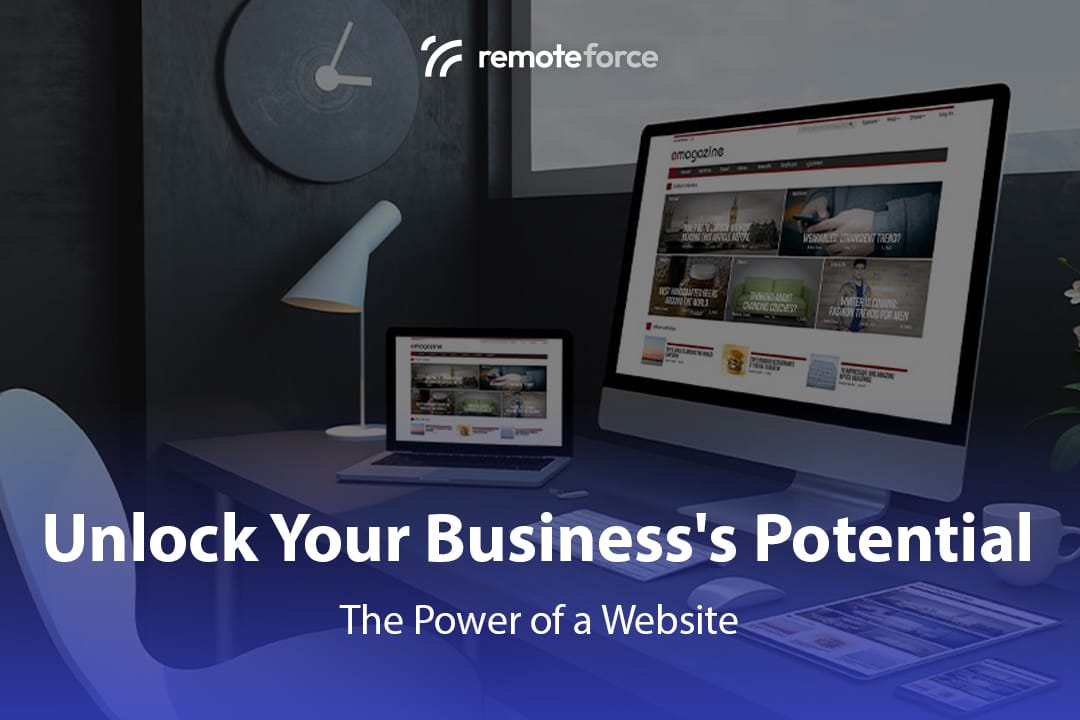
In today’s digital-first world, a website is no longer a luxury—it’s a fundamental necessity for any business, regardless of size or industry. It’s the digital cornerstone of your brand, a powerful marketing tool, and a critical asset for long-term growth.
If you’ve ever wondered why building a website is a non-negotiable step for modern businesses, this article will walk you through the key benefits. We’ll explore how a well-designed website can transform your brand, attract new customers, and streamline your operations, giving you a competitive edge in the marketplace.
Key Takeaways
A website is the core digital asset that transforms a business from a local entity into a scalable, credible, and automated operation.
- Credibility & Control: Your website is your brand’s most professional storefront, providing instant credibility and giving you full control over your narrative and data—something social media platforms cannot offer.
- 24/7 Automation: It functions as a non-stop sales and service engine, automating core tasks like lead capture, sales, and customer inquiries, directly leading to reduced operational costs and increased efficiency.
- Strategic Advantage: A website is the central hub for your Omnichannel marketing strategy, unifying the customer experience across all touchpoints (social, email, search). * Data-Driven Decisions: Analytics derived from your website provide actionable data on user behavior, allowing you to continually optimize marketing spend and improve conversion rates for sustainable growth.
Benefits of Creating a Website for Your Business
1. Establishing Trust and Credibility
Think of your website as your brand’s digital storefront and most professional first impression. When a potential customer hears about your business, the first thing they’ll likely do is search for you online. A professional, modern website instantly signals that you are a legitimate, serious, and trustworthy business.
- Showcase Your Expertise: Your website is the perfect platform to demonstrate what you do best. For service-based businesses, a well-organized website can serve as an online portfolio, displaying case studies, project examples, and client testimonials. It turns your intangible services into tangible proof of your value.
- The Power of Social Proof: Nothing builds credibility faster than social proof. Your website is the ideal place to prominently feature customer reviews, testimonials, awards, and logos of well-known clients. This third-party validation helps build confidence with prospective customers before they even interact with you.
- Create a Lasting Impression: A clean, easy-to-navigate website conveys professionalism and attention to detail. Conversely, a cluttered, slow, or non-responsive site can quickly drive visitors away, suggesting a lack of care or reliability.
2. Your 24/7 Marketing and Sales Engine
Unlike a physical store or a traditional ad campaign, a website works for you around the clock, every single day of the year. It’s a non-stop promotional channel that never sleeps.
- Unlock the Power of SEO: Search Engine Optimization (SEO) is the process of helping your website rank higher in search results. When a customer searches for a product or service you offer, a strong SEO strategy ensures you appear at the top of their results. This generates valuable organic traffic—visitors who are actively looking for what you provide—without the continuous cost of paid advertising.
- The Central Marketing Hub: All of your marketing efforts, from social media posts and email campaigns to print ads, should direct people to your website. It’s where your audience can learn more, engage with your content, and take the next step, whether that’s making a purchase or filling out a contact form.
- Expand Your Reach: A website instantly removes geographic limitations. It allows you to connect with customers across your city, country, or even the world. This is especially crucial for businesses looking to scale or those that operate primarily online.
3. Boosting Operational Efficiency and Cutting Costs
Beyond marketing, a website is a powerful operational tool that can save you time and money while streamlining your day-to-day business.
- Reduced Overhead: An online store or service-based website can significantly lower operational costs compared to a traditional physical location. You can save on rent, utilities, and staffing needs for basic tasks, allowing you to reallocate resources to more valuable areas of your business.
- Streamlined Customer Service: A well-designed website can handle a wide range of common customer inquiries on its own. Features like a detailed FAQ section, a searchable knowledge base, or a chatbot can provide instant answers, reducing the number of phone calls or emails your team has to handle. This frees up your staff to focus on more complex, personalized service.
- Automate Key Processes: A website can automate lead generation and sales. Through online forms, appointment booking systems, or e-commerce functionalities, your website can take care of foundational business tasks, allowing you to work more efficiently and scale your operations with ease.
Also Read: Why WordPress Website Development Is Still a Top Choice?
4. Gaining a Competitive Advantage with Actionable Data
Perhaps one of the most underappreciated benefits of a website is its ability to provide a constant stream of valuable data.
- Understanding Your Audience: With analytics tools like Google Analytics, you can see how visitors interact with your site. You can discover where they come from, which pages they spend the most time on, and at what point they leave. This information is invaluable for understanding your target audience and optimizing your customer journey.
- Making Smarter Decisions: This data isn’t just for curiosity. It’s the key to making data-driven decisions. You can use insights from your website to refine your product offerings, adjust your marketing strategy, and improve your user experience for higher conversion rates.
Website as the Core of Your Omnichannel Strategy
In the competitive Singapore market, simply having multiple channels (Multichannel) is not enough. Success requires connecting those channels into a single, unified customer journey (Omnichannel). Your website is the crucial lynchpin for this strategy.
An omnichannel strategy focuses on the customer, ensuring their experience is consistent and seamless regardless of how they interact with your brand.
Defining the Difference: Multichannel vs. Omnichannel
- Multichannel means you are present on many platforms (website, Facebook, email, physical store), but these channels operate independently.
- Omnichannel means all these channels are integrated and communicate with each other, using the website as the central transactional and informational hub.
Seamless Customer Journey (Cross-Channel Flow)
Your website enables key cross-channel actions:
- Social to Purchase: A user clicks an Instagram ad, lands on a dedicated landing page on your website, and completes the transaction. The experience is consistent in tone and design.
- Email to Information: A user receives an email with an offer, clicks through to a personalized product page on your site, and their browsing history is tracked for future email personalization.
Personalization and CRM Integration
The website is the primary source of user data, which feeds into your Customer Relationship Management (CRM) system.
- Actionable Data: If a user views a specific product on your website but abandons the cart, the website sends this data to the CRM. The CRM then triggers a personalized follow-up email, ensuring the customer feels recognized and valued across the next channel.
- Unified Profile: This integration ensures that whether a customer calls your support line, messages you on Facebook, or logs into your portal, the service agent sees the same unified history of their website visits, purchases, and inquiries.
Conclusion
A website is an essential, multi-faceted investment for any modern business. It’s the foundation for building brand credibility, the engine for continuous growth, and a powerful tool for improving operational efficiency. A professional website not only allows you to compete in today’s market but also provides you with a scalable asset that delivers long-term value.
Building a website is the first step, but a website’s true potential is unlocked through effective digital marketing. If you’re ready to take your online presence to the next level, consider partnering with an agency that can help you with your digital marketing needs.
Get in touch with us today on LinkedIn or Facebook!
Frequently Asked Questions (FAQ)
1. Is a social media page enough if I have a limited budget?
No. While social media is a vital marketing tool, it is not a sufficient replacement for a website. Social media platforms control the traffic, the rules, and the content format. A website is your owned media asset; it provides full control over branding, data, and functionality, and it’s essential for long-term SEO and building professional credibility.
2. What is the difference between a website builder (Wix/Squarespace) and a CMS (WordPress)?
- Website Builders are generally easier for quick, fixed-template sites. They are all-in-one but offer limited flexibility and scalability.
- CMS platforms (like WordPress.org) require more setup (hosting, maintenance) but provide unlimited control, integration, and scaling potential, making them the choice for serious business growth.
3. How much should I budget for a professional business website in Singapore?
Costs vary widely based on complexity:
- Basic informational site (5-10 pages): $2,500 – $5,000+ SGD.
- Custom CMS with e-commerce/complex features: $8,000 – $25,000+ SGD.
This budget typically includes development, design, and basic SEO setup, but ongoing hosting and maintenance are separate, continuous costs.
4. How long does it typically take to launch a business website?
- Simple site using a template: 2–4 weeks.
- Custom-designed and developed CMS site (standard complexity): 6–12 weeks.
The timeline depends heavily on the project scope, the number of required features, and the speed at which the business provides content and feedback.

- What Is Logo Design? A Complete Guide to Creating Memorable Brand Marks - February 2, 2026
- What Is Brand Identity? The Complete Guide to Building Recognition - February 2, 2026
- How Graphic Design Works: A Step-by-Step Process Guide - January 30, 2026