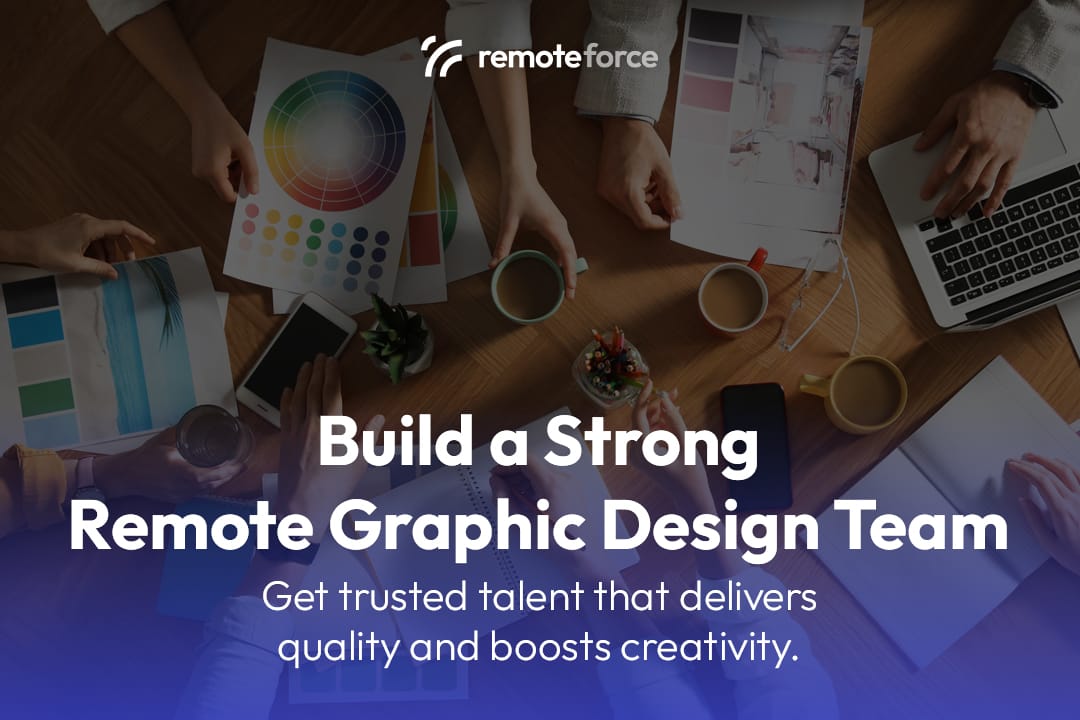
In the modern business landscape, visual identity is everything. From a company logo and website to social media campaigns, high-quality graphic design is crucial for standing out in a crowded market. While hiring an in-house design team is a traditional route, a growing number of businesses are discovering the benefits of building a strong and reliable remote graphic design team.
This approach not only offers flexibility and cost savings, but also provides access to a global pool of specialized talent. This guide will walk you through the key steps to help you build a trusted remote graphic design team that delivers quality, boosts creativity, and helps your business grow online.
Key Takeaways
Building a reliable remote graphic design team is a strategic move that delivers cost-efficiency, specialized expertise, and scale for your creative needs.
- Global Talent Access: Remote hiring eliminates local restrictions, allowing you to access highly specialized talent (e.g., Motion Graphics, UX/UI) at a cost-effective rate.
- The Test Project Rule: Never commit to a long-term contract without a small, paid test project. This evaluates not just aesthetic skill, but crucial factors like communication, professionalism, and adherence to deadlines.
- Process is Paramount: Reliability hinges on clear systems. A detailed Creative Brief must act as the single source of truth, and strict File Handover Protocols ensure consistency and organization for future use.
Trust & Transparency: Success in remote management depends on fostering trust through regular, brief check-ins and providing specific, actionable feedback, rather than vague criticism.
Why a Remote Team is a Smart Creative Strategy?
Before we get into the “how-to,” it’s important to understand the fundamental advantages of a distributed creative workforce.
- Access to Specialized Talent: You’re not limited to designers in your local area. You can find a specialist for every need—a logo designer, a UX/UI expert, a motion graphics artist, or a print designer.
- Cost-Effectiveness: You save on fixed costs like salaries, benefits, and office space. You only pay for the design work you need, making it a more efficient use of your budget.
- Increased Creativity: A remote team can bring a diverse range of cultural backgrounds and creative perspectives, leading to more innovative and unique design solutions.
- Flexibility and Scalability: You can easily scale your team up for a major campaign or down during slow periods, giving you the agility to adapt to changing business needs.
5 Steps to Building a Winning Remote Graphic Design Team

Building a successful remote graphic design team requires a clear strategy and the right tools. Follow these steps to ensure you find and manage the best talent.
1. Clearly Define Your Needs and Expectations
Before you begin your search, you must have a clear vision of what you need. Vague project descriptions lead to mismatched hires and wasted time.
- Create a Detailed Project Brief: This should include project goals, target audience, brand guidelines, desired style (e.g., minimalist, corporate), and specific deliverables (e.g., 5 social media graphics, a brand style guide).
- Specify Skill Requirements: Do you need a designer proficient in Adobe Creative Suite, Figma, or specific illustration styles? Being explicit about the tools and skills required will help you filter candidates effectively.
2. Vet Portfolios and Professionalism
A designer’s portfolio is your window into their abilities. It’s where you should spend most of your time during the hiring process.
- Look Beyond the Visuals: While the work should be visually appealing, look for projects that show problem-solving. How did they approach the design challenge? What was the outcome?
- Assess Communication and Process: A great designer can articulate their design choices clearly. Look for testimonials or case studies that demonstrate their professionalism, communication skills, and ability to meet deadlines. A reliable partner will be easy to work with.
3. Establish a Communication and Collaboration System
Clear communication is the backbone of any successful remote team. Without it, projects can go off track quickly.
- Use the Right Tools: Use project management software like Trello or Asana to track tasks and deadlines. Use communication platforms like Slack or Microsoft Teams for instant messaging and quick feedback.
- Schedule Regular Check-ins: A quick weekly or bi-weekly video call can help you stay aligned on progress, address any roadblocks, and maintain a personal connection with your team.
- Provide Clear Feedback: Be specific and constructive in your feedback. Instead of saying “I don’t like it,” explain “Could we try a different color palette to better align with our brand’s new guidelines?”
Also Read: Why More Companies Choose Graphic Design Outsourcing?
4. Start with a Test Project
Before committing to a long-term partnership, a small paid test project can save you a lot of time and potential headaches.
- Evaluate Their Process: A test project allows you to see how they handle feedback, manage a deadline, and communicate.
- Assess Deliverable Quality: You can evaluate not just their creative output but also the quality of their final files and organization. This is a real-world test of their reliability and professionalism.
5. Foster a Culture of Trust and Respect
A remote team, like an in-house one, thrives on trust. Treat your remote designers as valued partners, not just temporary hires.
- Set Clear Expectations: Be transparent about project timelines, feedback loops, and payment schedules.
- Celebrate Their Wins: Acknowledge and celebrate their contributions to your brand’s success. This helps build a positive, long-term working relationship.
Standardizing the Remote Creative Workflow for Quality Control
A high-performing remote design team requires a non-negotiable, standardized workflow. This structure ensures every project, regardless of the designer, adheres to brand standards and is delivered efficiently.
1. The Creative Brief: The Single Source of Truth
- Mandatory Detail: The brief must explicitly state the Goal, Target Audience, Key Message, Deliverable Dimensions/Format, Brand Assets to Use, and the Deadline. Ambiguity here guarantees wasted time and revisions.
2. Managing the Revision Loop
- Structured Feedback: Use tools (like Loom for video markup or Figma’s commenting) that allow for visual, specific, in-context feedback. Avoid written feedback delivered via email.
- Limit Rounds: Clearly define two or three rounds of revisions upfront in the contract to manage scope creep and keep the project on schedule.
3. Final File Handover Protocol
This is critical for future use by internal teams or other vendors.
- Naming Convention: Enforce a strict file naming system (e.g., Client-ProjectName-AssetType-Version_v3.ai).
- Format Standard: Deliverables must include both production files (layered .AI or .PSD) and final output formats (high-res JPG/PNG, optimized WebP/SVG).
- Asset Library: Store all final assets in a centralized, shared cloud folder (e.g., Google Drive, Dropbox) that both the designer and internal marketing team can access.
This standardized process turns a collection of remote individuals into a reliable, consistent creative partner.
Conclusion
Building a strong and reliable remote graphic design team is a powerful strategy for business growth. By carefully defining your needs, vetting talent, establishing clear communication, and treating your remote partners with respect, you can create a creative powerhouse that delivers high-quality work, boosts your brand’s online presence, and helps you achieve your business goals.
Ready to build a trusted remote graphic design team? RemoteForce specializes in connecting businesses with a curated network of highly skilled graphic design professionals. We handle the vetting process, so you can focus on working with top-tier talent. Let us help you find the perfect creative partner to elevate your brand and grow your business online.
Get in touch with us today on LinkedIn or Facebook!
Frequently Asked Questions (FAQ)
1. How do I protect my Intellectual Property (IP) when working with remote designers?
You must require the designer to sign a clear legal contract containing a “Work-for-Hire” clause and a comprehensive Non-Disclosure Agreement (NDA) before any project work begins. This ensures all final creative files and concepts become the exclusive property of your company upon payment.
2. How can I manage different time zones effectively?
You should focus on asynchronous communication (using tools like email and task management systems for non-urgent items) and designate a small overlap window (e.g., 1-2 hours) for synchronous video meetings or quick feedback. Set realistic deadlines based on the designer’s local time, not just your own.
3. Should I provide the design software licenses (e.g., Adobe Creative Cloud)?
It depends on the partnership. If you are hiring full-time remote staff, yes. If you are working with freelancers or a remote agency, they are typically expected to provide their own licensed software. Always confirm they are using legitimate, up-to-date versions of the required tools.
4. What is the typical hiring cost difference between a freelancer and a design agency?
- Freelancer: Usually the most cost-effective per hour, but requires the client to manage the project, strategy, and quality control.
Remote Agency (like RemoteForce): Higher hourly or project rates, but they provide a guaranteed Art Director/Project Manager, quality control, legal protection, and seamless scalability, often resulting in lower overall project risk and better strategic output.

- How Layout Impacts Conversions: The Science Behind Design That Sells - February 11, 2026
- What Is Visual Hierarchy? A Guide to Organizing Design Elements That Guide the Eye - February 11, 2026
- What Is Layout Design? The Foundation of Visual Communication That Drives Results - February 10, 2026