Difference Between E-Commerce and Marketplace

E-Commerce vs Marketplace: What's the Difference?

In the world of online shopping, the terms “e-commerce” and “marketplace” are often used interchangeably, but they represent two distinct business models with key differences in their structure, operation, and benefits. Understanding the nuances between them is crucial for any business looking to establish or expand its online presence.

This article will break down the difference between e-commerce and marketplace. You’ll discover how they work, key benefits, and, most importantly, which model suits your business best to ensure long-term success.

What is an E-Commerce Website?

An e-commerce website is an online store that a single business owns and operates. Think of it as a digital version of a physical boutique store. The owner has complete control over every aspect of the site, from the products sold to the branding, user experience, and customer data.

Key Characteristics:

  • Single Seller: All products or services on the site are sold by one company.
  • Full Control: The business manages everything, including inventory, pricing, shipping, and customer service.
  • Direct Customer Relationship: The business has a direct line of communication with its customers, allowing for better relationship building and data collection.

Examples: Apple.com, Nike.com, or your own brand’s Shopify store.

What is a Marketplace?

A marketplace is an online platform that connects multiple buyers and sellers. It acts as an intermediary, providing a centralized space for various vendors to list their products or services. The marketplace owner manages the platform, but the sellers are responsible for their own products, inventory, and fulfillment.

Key Characteristics:

  • Multiple Sellers: The platform hosts products from many different businesses.
  • Shared Platform: The marketplace owner controls the overall platform, while sellers manage their own virtual storefronts.
  • Indirect Customer Relationship: The customer’s primary relationship is with the marketplace, not the individual seller, which can limit direct brand building.

Examples: Amazon, eBay, and Etsy.

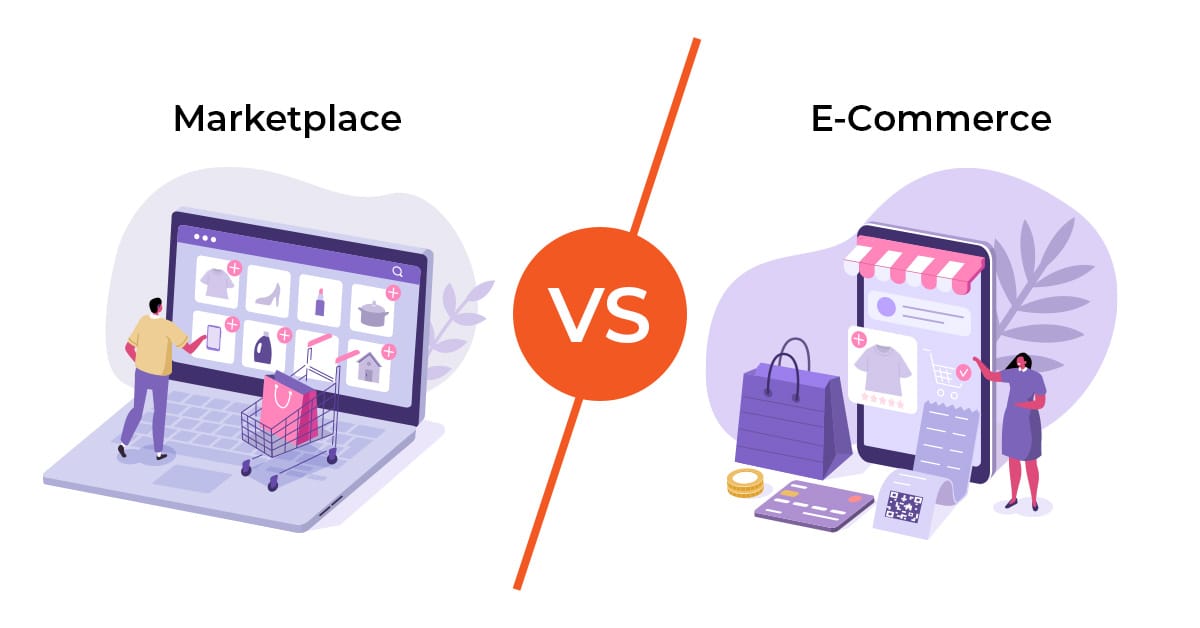
E-Commerce vs Marketplace: A Direct Comparison
Difference Between E-Commerce and Marketplace

FeatureE-Commerce WebsiteMarketplace
ControlFull control over branding, pricing, and customer experience.Limited control; bound by the marketplace’s rules and platform.
CompetitionYou only compete with your own products.You compete directly with thousands of other sellers.
CostsHigh initial setup and maintenance costs (web development, hosting, marketing).Lower initial cost, but you pay fees on each sale (commissions, listing fees).
AudienceYou must build your own audience from scratch.You gain immediate access to a massive, pre-existing audience.
Brand BuildingStrong brand identity and direct customer relationships.Limited brand building; your brand can get lost in the sea of competitors.
DataYou own all the customer data.The marketplace owns the customer data; you receive limited insights.

Which Model is Best for Your Business?

Choosing the right model depends on your business goals, resources, and strategy.

  • Choose E-commerce if you want:
    • To build a strong, recognizable brand identity.
    • Complete control over your customer’s experience.
    • To own your customer data for future marketing and analysis.
    • To invest in long-term brand equity and a loyal customer base.
  • Choose Marketplace if you want:
    • To start selling quickly with minimal initial investment.
    • Immediate access to a large, existing audience.
    • To test a new product or service before committing to a full e-commerce setup.
    • To reduce your operational burden by leveraging the platform’s infrastructure.

For many businesses, a hybrid model is the most effective. You can start by selling on a marketplace to gain initial traction and then use that success to fund and build your own e-commerce website. This strategy gives you the best of both worlds: immediate exposure and long-term brand control.

Conclusion

Both e-commerce and marketplaces offer valid paths to online success. The difference between e-commerce and marketplace lies in their fundamental structure—a single-brand store versus a multi-seller platform. By understanding these differences, you can make an informed decision that aligns with your business goals and sets you up for lasting success.

Ready to build a digital presence that works for you? RemoteForce provides expert digital marketing services and web and app development services to help you build a powerful e-commerce store or optimize your presence on marketplaces. Contact us today to learn how our flexible and cost-effective solutions can help you thrive online.

Get in touch with us today on LinkedIn or Facebook!

Transforming ideas into solution

YOU MIGHT ALSO INTERESTED IN

Other Articles

Subscribe to our Newsletter

Fill out the form to subscribe to our news