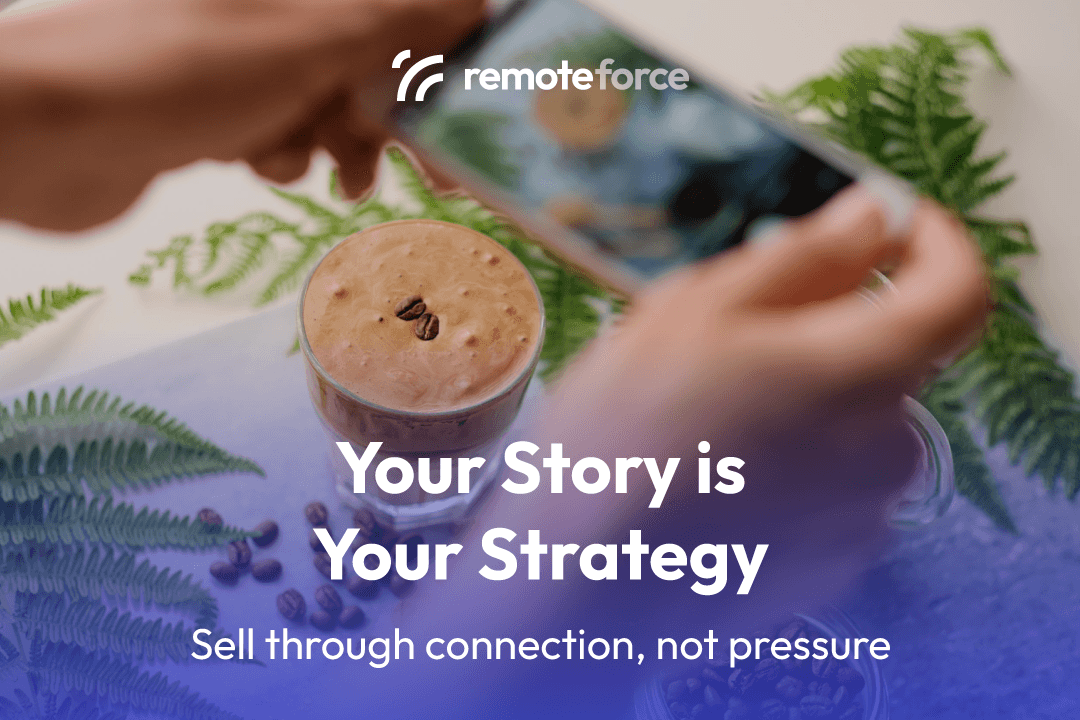
Picture this: You’re scrolling through social media, sipping your coffee, when suddenly — BAM! An ad jumps out screaming, “BUY NOW!” Your reflex? Scroll faster.
Now imagine this: You see a post about a small business that started in a garage, grew through passion and creativity, and now helps others achieve their dreams. You’re hooked. You read. You relate. And by the end… you’re curious enough to click.
That’s the magic of storytelling. And if your business isn’t using it yet, well — let’s fix that.
Table of Contents
ToggleKey Takeaways
Storytelling is not a luxury; it’s a strategic necessity for building trust and driving action in a crowded market.
- Emotion Drives Action: Consumers are fatigued by hard selling. Stories create emotional connections and build trust, which are the actual drivers of purchasing decisions.
- Memorability is Key: People quickly forget statistics and prices, but they remember great narratives. Storytelling gives your brand a unique heartbeat and makes it instantly recognizable.
- The Three-Act Structure: Every successful business story must include: 1) A Relatable Problem (the customer’s pain point), 2) A Hero/Guide (your business as the solution), and 3) A Triumphant Victory (the customer’s success).
- Beyond Features: Use narratives to turn abstract product features into tangible customer benefits and clearly communicate your Unique Value Proposition (UVP).
Curiosity Leads to Conversion: A good story sparks curiosity and naturally drives the audience to take action, whether it’s clicking an ad or adding an item to the cart.
Why Selling Alone Doesn’t Work Anymore
Let’s be real — people are tired of being sold to. Every day, we’re bombarded with ads that sound like broken records: “Best product ever! Don’t miss out! Limited time offer!” Yawn.
But stories? Stories make us feel something. And emotions drive decisions. Whether we realize it or not, we buy from brands that connect with us. It’s like making a new friend — you don’t decide to hang out with someone because they listed all their achievements in a monotone voice. You connect because they shared a funny moment or a personal struggle.
Your marketing should do the same.
How Storytelling Supercharges Your Marketing
Stories Build Trust
Imagine you’re choosing between two skincare brands. One says, “We have the best ingredients!” The other tells you about a founder who battled sensitive skin for years and created a product that changed her life. Who do you trust more?Stories Make You Memorable
People forget stats. People forget prices. But they remember a great story. It gives your brand a heartbeat.Stories Drive Action
A good story sparks curiosity. It invites people into your world and makes them want to be part of the journey — whether that means signing up for your newsletter or clicking “Add to Cart.”
Okay, But How Do I Tell a Good Story?
Glad you asked! Here are a few tricks to get you started:
- Start with a Relatable Problem:
Every great story begins with a challenge. Think about what keeps your audience up at night. Are they struggling to get noticed online? Are their ads falling flat? That’s your hook. When you show you understand their pain points, they’ll want to stick around to hear the solution. - Introduce a Hero (That’s You!):
Every story needs a hero — and in this case, it’s your business. You’re the one swooping in with the game-changing solution. Whether you’re helping companies craft engaging content, run seamless ad campaigns, or optimize their digital presence, you’re the expert guiding them toward success. - End with a Victory:
No story is complete without a triumphant ending. Show the transformation. Did your service help a startup go viral? Did sales skyrocket? Maybe a struggling brand found its voice and built a loyal community. Share the results — and let your audience imagine their own success story.
Storytelling Marketing Strategy in Action: RemoteForce Edition
Let’s be honest — marketing can feel overwhelming, especially when you’re running a business. You’ve got emails to send, products to manage, and somewhere in between, you’re supposed to post on social media, create ads, and track analytics?! Who has the time?
That’s where RemoteForce comes in. We’re not just marketers we’re storytellers. We help businesses like yours craft narratives that resonate, connect, and convert. And the best part? No office needed. Our team works remotely, delivering creative, high-impact campaigns that help your brand shine.
The Three Essential Story Types Every Business Needs
A complete marketing strategy requires more than just one story; it requires a versatile arsenal of narratives that serve different purposes from building credibility to fostering loyalty.
Also Read: How to Strengthen Your Brand and Build Trust
The Three Essential Story Types Every Business Needs
The Founders’ Story (The “Why”)
- Goal: To build trust and humanize the brand.
- Focus: The personal struggle, passion, or specific moment that drove the founder to start the business. This explains the company’s “why” and its core values, making the brand immediately relatable.
- Example: “I started this sustainable clothing line after seeing the textile waste crisis firsthand…”
The Customer Success Story (The “Proof”)
- Goal: To provide social proof and demonstrate tangible results.
- Focus: The customer is the true hero of this story. Detail the challenge they faced, how they used your product as a solution, and the measurable victory they achieved. This is often delivered as a case study or testimonial video.
- Example: “Sarah, a Singapore-based freelancer, increased her recurring revenue by 40% after implementing our automated scheduling tool.”
The Mission/Vision Story (The “Future”)
- Goal: To inspire loyalty and define the brand’s collective purpose.
- Focus: This story describes the future world the company is trying to create, often involving larger societal or environmental issues. It invites customers to join a movement rather than just buying a product.
Example: “We believe that by 2030, every local hawker stall can use our AI inventory system to cut food waste to zero, making Singapore a greener city.”
Ready to Share Your Story?
Your business deserves marketing that stands out — no office, no hassle. Whether you’re a startup or a seasoned business, we help you connect with your audience and grow your brand through storytelling that sells.
Let’s create something unforgettable.
Ready to create something unforgettable? Let RemoteForce’s marketing services craft compelling stories that elevate your brand, so you can focus on growing your business.
Get in touch with us today on LinkedIn or Facebook to get started.
Frequently Asked Questions (FAQ)
1. Where should I use storytelling in my marketing?
Storytelling should be embedded everywhere:
- Website: On your “About Us” page (Founder’s Story) and product landing pages (Customer Success Stories).
- Social Media: In your short-form videos (the Relatable Problem hook).
- Email Marketing: In your welcome sequences to introduce the brand and build connection.
- Sales Pitches: Start every presentation with a customer problem, not a product feature list.
2. Should I talk about my business failures in a story?
Yes, selectively. Vulnerability builds enormous trust. Talking about a failure or setback (the “inciting incident”) and how your team learned from it and overcame it makes your eventual success more credible and relatable. However, always ensure the story ends with a clear victory and lesson learned.
3. How long should a good marketing story be?
The length depends entirely on the channel:
- Social Media (TikTok/Reels): 7–15 seconds (Relatable Problem/Hook only).
- Email/Blog: 300–500 words (Full three-act structure).
- Website Video: 60–90 seconds (Concise, high-impact overview).
The key is to use only the details necessary to move the audience from the problem to the solution.
4. What if my product is “boring” (e.g., accounting software)?
No product is truly boring; the problem it solves is always interesting.
- Focus on the user transformation: Instead of discussing the software’s features, tell the story of the small business owner who spent 20 hours a month doing manual bookkeeping (the problem) and now spends 30 minutes (the victory) thanks to your tool. The story is about peace of mind and time saved, not the software itself.