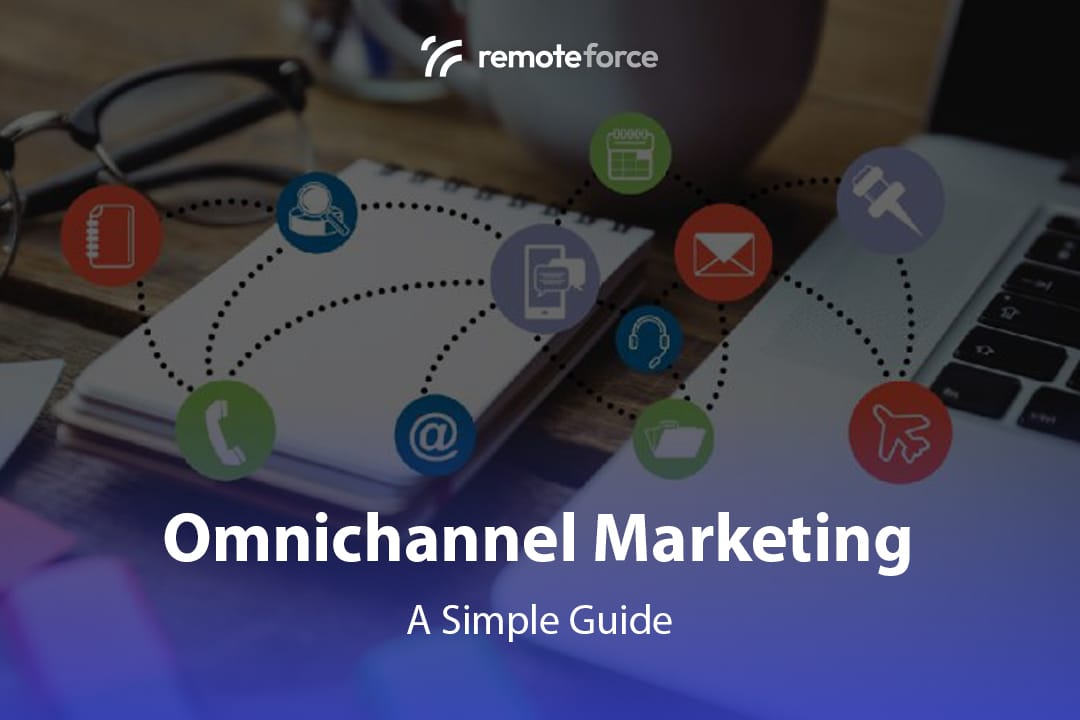
In the modern marketing landscape, “multichannel” and “omnichannel” are two keywords that are often mentioned. While both involve using multiple channels, the difference is crucial for serious business growth. If multichannel is about giving customers choices, omnichannel marketing is about creating a fully integrated and seamless customer journey.
This guide will take you beyond the multichannel concept to understand what omnichannel marketing is, why it’s essential for every business, and how you can implement it to build strong brand loyalty.
Table of Contents
ToggleKey Takeaways
Omnichannel marketing transforms a series of disconnected interactions into a single, cohesive customer journey, driving superior loyalty and profit.
- Customer-Centricity: Omnichannel is a customer-centric strategy focused on creating a single, seamless, and unified customer experience across every touchpoint, online and offline.
- Integration over Independence: Unlike Multichannel, all Omnichannel channels are fully integrated and coordinated, ensuring data and context from one interaction instantly inform the next.
- High Value Customer: Omnichannel customers exhibit 30% higher Customer Lifetime Value (CLV) due to reduced friction, enhanced convenience, and increased loyalty.
- The 360° View: Implementation requires consolidating all customer data into a single system (CRM) to gain a comprehensive 360-degree view for personalized messaging.
- Map the Journey: Success hinges on meticulously mapping the customer journey and eliminating friction points when customers transition between channels (e.g., viewing an item online and then seeing staff know the exact details in-store).
Omnichannel: The Core of a Unified Customer Experience
At its heart, omnichannel marketing is a customer-centric strategy that aims to create a seamless and unified brand experience across every touchpoint, both online and offline.
Unlike multichannel, where each channel often operates independently, the omnichannel approach integrates all your channels. In other words, data and interactions from one channel inform and enhance the experience on another. The goal is to make customers feel as if they are interacting with a single entity, not a series of disconnected channels.
Multichannel vs Omnichannel: The Defining Difference
Understanding the distinction between these two approaches is key to choosing the right strategy.
| Feature | Multichannel Marketing | Omnichannel Marketing |
|---|---|---|
| Focus | Company-centric | Customer-centric |
| Channel Operation | Independent | Integrated & Coordinated |
| Customer View | Disconnected per channel | Single, unified view |
| Goal | Maximize reach | Maximize customer experience |
| Example | Customer can buy on website or in-store, but systems are separate. | Customer can check online for in-store stock, order online, and pick up in-store. |
Why an Omnichannel Strategy Is So Important?
While more complex to implement, a successful omnichannel strategy provides significant benefits that surpass a traditional multichannel approach.
1. Enhancing Customer Loyalty and Retention
A seamless and unified experience builds trust and reduces friction. Customers don’t have to repeat information or search for data they have already provided. This convenience increases customer satisfaction, which directly leads to improved long-term loyalty and retention.
2. Increased Profit and Customer Lifetime Value (CLV)
Customers who interact with you through multiple channels are worth significantly more. Studies show that omnichannel customers have a 30% higher lifetime value than those who use only one channel. The personalized and convenient experience drives repeat purchases and higher average order values.
3. Improved Insights and Data-Driven Decision-Making
With data flowing freely across channels, you can get a complete 360-degree view of the customer journey. These insights are invaluable, allowing you to personalize messages, identify trends, and make more strategic and effective marketing decisions.
Real-World Omnichannel Examples
The world’s leading brands have mastered the art of omnichannel marketing.
Starbucks: The Seamless App
Starbucks is a prime example. Their mobile app allows you to order and pay for a drink on your phone and pick it up in-store, skipping the line. The ability to check the menu, view previous orders, and redeem rewards from the same app no matter where you are creates a highly integrated experience.
Apple: Store and Online Integration
Apple has created a perfect omnichannel environment. You can order a product online and schedule an in-store pickup. Your order data is integrated so that staff can assist you immediately. The physical stores also serve as educational and support hubs that drive online sales.
Also Read: What is Multichannel Marketing? A Simple Guide
How to Implement an Effective Omnichannel Strategy
1. Consolidate Your Data
It’s crucial to consolidate all customer data into a single system (typically a CRM) to get a unified view. This allows you to track the customer journey across every channel.
2. Map Your Customer Journey
Understand how customers interact with your brand at each stage. Identify friction points and find ways to make the transitions between channels seamless.
3. Automate with a Touch of Personalization
Use automation tools to send personalized messages based on customer behavior. For example, if a customer views a pair of shoes on your website but doesn’t buy them, send an email that automatically displays those shoes and their stock availability.
The Omnichannel Tech Stack: Essential Tools for Data Integration
The greatest challenge in achieving a seamless omnichannel experience is technological: getting disparate systems to talk to each other. Success depends on selecting and integrating the right core platforms.
The CRM: The Brain of the Operation
The Customer Relationship Management (CRM) system (e.g., Salesforce, HubSpot, Zoho) must serve as the central hub.
- Role: Every interaction—from a social media comment to an in-store purchase—must be logged here. It provides the sales and service teams with the complete, real-time 360-degree view of the customer needed to deliver personalized service.
Marketing Automation Platform (MAP): The Handoff Engine
The MAP (often integrated with the CRM) manages the flow of communication across digital channels.
- Role: It uses data from the CRM to trigger sequences and adjust messaging dynamically.
- Example: The MAP triggers a reminder SMS (Channel 1) to a customer who clicked an email coupon (Channel 2) but has not used it yet.
Customer Data Platform (CDP): The Future of Integration
For large, complex organizations, a dedicated Customer Data Platform (CDP) is essential.
- Role: A CDP collects and unifies data from all sources (web, app, POS, CRM, etc.), cleans it, and stitches together customer identity (identity resolution) across devices and channels. This allows for extremely precise audience segmentation and personalization in real-time across the entire ecosystem.
Also Read: Multichannel vs Omnichannel Marketing: Key Differences
Conclusion
Omnichannel marketing is the logical next step from multichannel, focusing on a fully integrated customer experience. While it requires an investment in technology and planning, the benefits in terms of customer loyalty, sales, and business insights make it an indispensable strategy. By unifying all your channels, you can provide a seamless and memorable experience that turns customers into true fans.
Building an effective omnichannel strategy requires expertise in digital marketing, design, and development. If you need a skilled team to make your brand experience seamless and impressive, the RemoteForce team of experts is ready to help. As an outsource manpower solutions provider, we provide experienced professionals in digital marketing, web and app development, graphic design, and more to help you realize your vision.
Get in touch with us today on LinkedIn or Facebook!
Frequently Asked Questions (FAQ)
1. Is Omnichannel Marketing only suitable for large, established businesses?
While enterprise businesses (like Apple or Starbucks) execute it perfectly, the principle is vital for all. Small businesses can start by ensuring their website, social media, and email are perfectly aligned and data is centralized in a simple CRM. Omnichannel is a mindset before it is a technology investment.
2. How does Omnichannel impact the Customer Service team?
It dramatically improves customer service quality and efficiency. When a customer contacts support (via phone, chat, or email), the service agent immediately has the full history of the customer’s website visits, purchases, and previous interactions, eliminating the frustrating need for the customer to repeat their issue.
3. What is the biggest internal challenge when moving to Omnichannel?
The biggest challenge is often Organizational Silos. Marketing, Sales, and Customer Service teams must abandon their departmental goals and align under a single, shared goal: the optimized customer journey. This requires leadership commitment and shared metrics.
4. Can I rely on social media alone for an Omnichannel strategy?
No. Social media is only one touchpoint. A true omnichannel strategy must integrate the digital (social, web, email) with the physical (store, call center, mobile app) to track the customer seamlessly. Relying on one channel is the definition of a single-channel, not an omnichannel, approach.